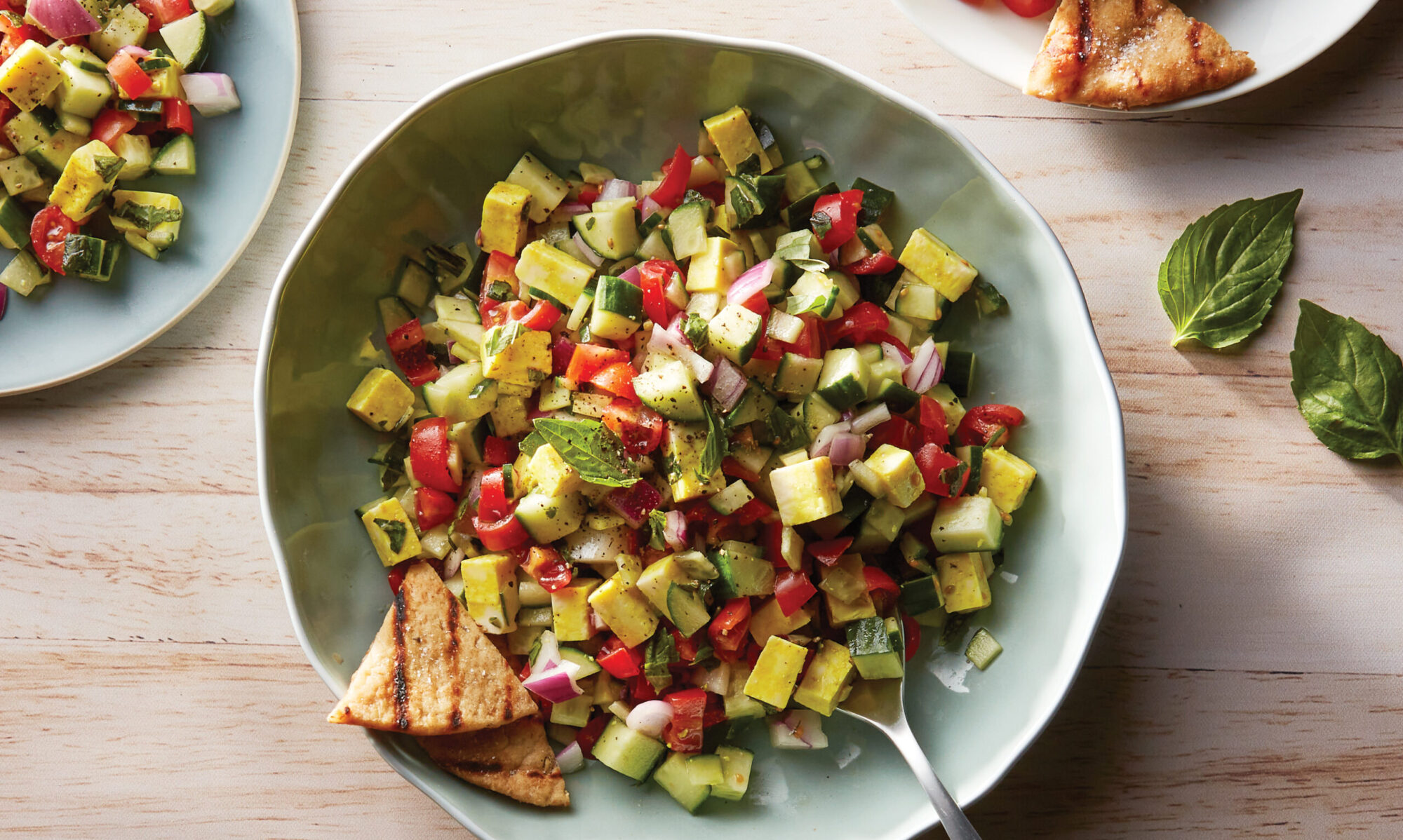
An easy farmers market spaghetti with roasted summer vegetables, a nostalgic ’70s soundtrack, and a reminder that the best moments in life are often the simplest.
An Easy Summer Pasta made for Slowing Down
Summer cooking should feel different.
It should be lighter, looser, and a little less concerned with perfection. It should leave time for sitting outside, chasing sunsets, listening to music, and spending long evenings with the people we love.
“Summer isn’t asking us to do more. It’s inviting us to notice more.”
This easy summer spaghetti is designed for exactly that kind of night.
Fresh cherry tomatoes, sweet white corn, and garlic roast together on one sheet pan until the tomatoes burst,
the corn begins to caramelize, and the garlic becomes tender and fragrant.
Paper-thin zucchini ribbons join the pan during the final few minutes so they soften gently without becoming heavy or watery.
The roasted vegetables are then tossed with al dente spaghetti, fresh basil, parsley, a small drizzle of extra-virgin olive oil, and enough pasta water to bring everything together.
There is no cream sauce, no complicated preparation, and no long list of ingredients.
The vegetables create their own light sauce as they roast. Their juices mingle with the garlic and olive oil, coating the spaghetti with fresh summer flavor.
It is simple, colorful, and satisfying without feeling heavy—the perfect pasta for warm evenings on the patio, at the lake, or around a table filled with friends.
“Summer teaches us that slowing down isn’t falling behind—it’s finally catching up with life.”
Why You’ll Love This Summer Pasta Recipe
Everything comes together with one pot and one sheet pan.
It highlights fresh farmers market vegetables.
The pasta is light and flavorful without a heavy sauce.
It can be served hot, warm, or at room temperature.
The recipe is easy to customize with seafood, chicken, beans, or cheese.
It leaves more time for enjoying summer and less time washing dishes.
Slow Summer Spaghetti with Zucchini Ribbons, Sweet Corn and Roasted Tomatoes
Prep Time 15 minutes
Cook Time 25 minutes
Total Time 40 minutes
Yield 4 to 6 servings
Ingredients
12 ounces high-quality spaghetti
2 cups cherry or grape tomatoes
2 ears fresh sweet white corn, husked
6 garlic cloves, peeled and lightly smashed
2 medium zucchini
2 tablespoons extra-virgin olive oil, divided
¾ teaspoon kosher salt, divided
Freshly ground black pepper, to taste
¼ teaspoon crushed red pepper flakes, optional
½ cup loosely packed fresh basil leaves, torn
¼ cup chopped fresh Italian parsley
½ to 1 cup reserved pasta water
Zest of ½ lemon, optional
Freshly grated Parmesan or Pecorino Romano, optional
Instructions
1. Prepare the sheet pan
Preheat the oven to 425°F. Line a large rimmed sheet pan with parchment paper for easier cleanup.
2. Roast the tomatoes, corn, and garlic
Cut the corn kernels from the cobs and add them to the prepared sheet pan with the cherry tomatoes and garlic cloves.
Drizzle the vegetables with approximately 1½ tablespoons of the olive oil. Season with ½ teaspoon kosher salt, freshly ground black pepper, and crushed red pepper flakes, if using.
Toss gently and spread the vegetables into an even layer.
Roast for 15 minutes.
3. Make the zucchini ribbons
While the vegetables are roasting, trim the zucchini. Use a vegetable peeler or mandoline to slice each zucchini lengthwise into long, paper-thin ribbons.
Rotate the zucchini as you work, stopping when you reach the soft, seedy center.
4. Add the zucchini to the sheet pan
Remove the sheet pan from the oven and add the zucchini ribbons.
Gently toss the zucchini with the tomatoes, corn, garlic, and roasting juices. Return the pan to the oven and roast for an additional 6 to 8 minutes.
The zucchini should be tender but still hold its shape.
5. Cook the spaghetti
While the zucchini finishes roasting, bring a large pot of generously salted water to a boil.
Cook the spaghetti until al dente according to the package directions.
Before draining the pasta, reserve at least 1 cup of the starchy cooking water.
6. Toss the pasta
Drain the spaghetti and return it to the pot.
Add the roasted vegetables and all the juices from the sheet pan. Add the remaining olive oil, torn basil, chopped parsley, and approximately ½ cup of reserved pasta water.
Toss the pasta over low heat until the vegetables are evenly distributed and the spaghetti is lightly coated and glossy.
Add additional pasta water, a few tablespoons at a time, if needed.
7. Finish and serve
Taste and adjust the seasoning with additional salt and black pepper.
Add fresh lemon zest for brightness or grated Parmesan or Pecorino Romano for a richer finish, if desired.
Serve immediately, or allow the pasta to cool slightly and enjoy it warm or at room temperature.
Tips for the Best Summer Vegetable Pasta
Choose ripe cherry tomatoes
Look for tomatoes that feel heavy for their size and have a rich color. Mixed-color heirloom cherry tomatoes also make the finished dish especially beautiful.
Use fresh corn when possible
Fresh market corn provides a crisp texture and natural sweetness. Frozen corn can be substituted, but thaw and pat it dry before roasting.
Do not overcook the zucchini
Because the zucchini is sliced into delicate ribbons, it only needs a few minutes in the oven. Add it after the other vegetables have already begun roasting.
Save the pasta water
Starchy pasta water helps the roasted vegetable juices and olive oil cling to the spaghetti. It creates a silky finish without adding cream or butter.
Use a flavorful extra-virgin olive oil
Because this recipe uses so few ingredients, the quality of the olive oil matters. Choose one with a fresh, fruity flavor rather than an overly bitter or aggressive finish.
Recipe Variations
Add grilled shrimp or scallops for a light seafood pasta.
Top each bowl with burrata, ricotta, feta, or goat cheese.
Add cannellini beans or chickpeas for a vegetarian protein boost.
Substitute linguine, bucatini, angel hair, or your favorite short pasta.
Add arugula or baby spinach when tossing the hot pasta so the greens wilt slightly.
Finish with toasted pine nuts, pistachios, walnuts, or breadcrumbs for texture.
“The sweetest moments are rarely planned. They happen somewhere between the last rays of sunlight and the first stars.”
What to Serve with Summer Spaghetti
Serve this pasta with grilled bread, a simple green salad, marinated olives, or a platter of sliced melon and prosciutto.
For dessert, keep things equally relaxed with fresh peaches, cheesecake or lemon sorbet, berries and whipped cream, or a rustic summer fruit galette.
Summer Cocktail Pairings
Elderflower Gin and Tonic
Ingredients
1½ ounces gin
½ ounce elderflower liqueur
4 ounces chilled tonic water
Fresh lemon
Cucumber ribbon or basil, for garnish
Instructions
Fill a large wine glass with ice. Add the gin and elderflower liqueur. Top with tonic water and a squeeze of lemon.
Stir gently and garnish with cucumber, basil, or a lemon wheel.
Limoncello Spritz
Ingredients
2 ounces limoncello
3 ounces chilled Prosecco
1 ounce sparkling water
Lemon wheel and basil, for garnish
Instructions
Fill a wine glass with ice. Add the limoncello, Prosecco, and sparkling water. Stir gently and garnish with lemon and basil.
Aperol Spritz
Ingredients
3 ounces Prosecco
2 ounces Aperol
1 ounce sparkling water
Orange slice, for garnish
Instructions
Fill a wine glass with ice. Add the Prosecco, Aperol, and sparkling water. Stir briefly and garnish with an orange slice.
Wine Pairings for Summer Vegetable Pasta
Choose a wine with crisp acidity, fresh citrus notes, and enough brightness to complement the tomatoes, corn, zucchini, and herbs.
Recommended options include:
Vermentino
Pinot Grigio
Sauvignon Blanc
Dry rosé
Soave
Gavi
Prosecco
Serve white and rosé wines well chilled, preferably outside as the sun begins to set.
A ’70s Slow Summer Playlist
Complete the experience with a playlist filled with smooth, easygoing ’70s soft rock and yacht-rock favorites.
Turn up the music, pour something cold, and bring the pasta outside.
Summer is too short to spend the whole evening standing over the stove.
“Maybe reminiscing isn’t about wishing we could go back. Maybe it’s about remembering what mattered most, so we can choose it again today.”
Savor the Slow Summer Moments
This recipe is less about doing something elaborate and more about paying attention to what is already good.
Fresh corn. Warm tomatoes. Fragrant basil. Music playing through an open door. A chilled glass in your hand. People you love gathered around the table.
Take it easy.
Savor each bite.
Laugh more. Live more.
Chill out more.
Watch the sunset instead of watching the clock.
Save this easy summer spaghetti recipe for your next farmers market haul, backyard dinner, lake weekend, or relaxed evening with friends.
“You don’t have to travel far to find paradise. Sometimes it’s waiting on the back patio with spaghetti, basil, good friends, and a July sunset.”
Leave a comment and tell me: What song would you add to the ultimate slow-summer playlist?
Subscribe to The Artful Gourmet for more seasonal recipes, nostalgic food stories, cocktails, curated playlists, and inspiration for living—and eating—a little more deliciously.
“The older I get, the more I realize that luxury isn’t found in extravagance—it’s found in time. Time to cook, time to laugh, time to linger, and time to simply be.”
About the Author
Kristen Hess – Host, Author, Photographer and Creator of The Artful Gourmet
Kristen Hess is a Food Stylist, Photographer, Food Writer, Recipe Developer and the Creator of The Artful Gourmet Blog, Substack and Social Media — a food + lifestyle media brand rooted in fresh comfort food, visual artistry, and the stories we tell around the table. Find her on Substack, The Artful Gourmet Podcast and YouTube Channel and food blog at theartfulgourmet.com.
This buttery garlic clam pasta recipe has been a family favorite for more than 35 years—and it’s still one of the best seafood pasta dishes you’ll ever make.
Summer always puts seafood on my mind.
Maybe it’s the warm weather, the longer evenings, or memories of family dinners back home in Rochester, New York. Whatever it is, there’s something about a big bowl of seafood pasta paired with a crisp glass of white wine that feels like summer itself.
One of my favorite recipes is this classic Linguine&Clams recipe from Bill Gutsch, a beloved Rochester, NY news anchor whose recipe became famous after it won a local city-woe recipe contest an appeared in the Democrat & Chronicle food section decades ago.
Long before recipes went viral on social media, great dishes spread the old-fashioned way—from newspaper clippings to recipe boxes, from neighbors to friends, and eventually to family dinner tables like ours.
My mom clipped the recipe years ago and it quickly became a family favorite. She would make it for special occasions, summer dinners, or Friday nights when everyone gathered around the table with a green salad, garlic bread, and a bottle of wine.
The Gutsch’s Linguine
To this day, every time I make it, I’m transported right back to those evenings.
Why This Linguine & Clams Recipe Works
Let’s talk about the flavor combination.
Bacon.
Butter.
Garlic.
Clams.
Fresh parsley.
Black olives.
Pasta.
Need I say more?
The salty bacon and briny clams create an incredible depth of flavor, while the butter and garlic bring everything together into a silky, savory sauce that coats every strand of linguine.
Is it diet food?
Absolutely not.
Is it worth every bite?
Absolutely yes.
Sometimes it’s okay to indulge a little.
In a world obsessed with counting calories and cutting carbs, recipes like this remind us that food is meant to be enjoyed. There’s something comforting about old-school recipes that don’t apologize for being rich, satisfying, and delicious.
As I’ve gotten older, I’ve come to appreciate these recipes even more. They’re not just meals—they’re memories. I remember my Mom and Dad making this dish on a Summer Friday night- windows open, a Frankie Valli record playing in the background, a Gin and Tonic or glass of wine in hand, just enjoying the perfect setting of a family dinner together around our kitchen table in the mid-80s.
The Perfect Summer Seafood Dinner
This easy linguine and clams recipe comes together in about 30 minutes, making it perfect for:
Summer entertaining
Date nights at home
Beach house dinners
Family gatherings
Casual weekend meals
Serve it with:
Crusty Italian bread
A simple green salad
Sauvignon Blanc
Pinot Grigio
Finger Lakes Riesling
Vermentino
The bright acidity of these wines balances the richness of the butter while enhancing the sweet, briny flavor of the clams.
Gutsch’s Linguine & Clams
10 minutes
Gutsch’s Famous Linguine & Clams Recipe Prep Time 10 minutes
Cook Time 20 minutes
Total Time 30 minutes
Servings 2-4 servings
Ingredients
4-5 slices bacon, cut into ¼-inch strips
1/8 cup sliced green onions
1 garlic clove, minced
3 tablespoons butter
1 (6.5-ounce) can chopped clams or baby whole clams
¼ cup sliced black olives
1/8 cup fresh parsley, chopped
Freshly ground black pepper
6 ounces linguine pasta
Optional
¼ cup dry white wine
Extra parsley for garnish
Freshly grated Parmesan cheese
Instructions
Cook bacon in a large skillet until crisp. Remove and set aside, reserving about 1/8 cup bacon drippings in the pan.
Add green onions and garlic to the skillet and sauté until tender but not browned.
Stir in butter and allow it to melt completely.
Drain clams, reserving the clam juice.
Add clams, bacon, black olives, parsley, and black pepper.
Pour in half of the reserved clam juice and, if desired, add the white wine. Simmer gently for 2-3 minutes.
Meanwhile, cook linguine according to package directions until al dente. Drain.
Add cooked linguine directly to the skillet and toss until evenly coated.
Transfer to a serving bowl and garnish with additional parsley and black pepper.
Serve immediately with crusty bread and a chilled glass of white wine.
Recipe Notes
Substitute olive oil for butter for a lighter version.
Fresh littleneck clams may be used instead of canned clams.
Add crushed red pepper flakes for a little heat.
For extra garlic flavor, double the garlic.
The Story Behind the Recipe
The full story behind this Rochester classic—including memories of family dinners, summer evenings, and why recipes like this become part of our lives for generations—is featured in my latest Substack essay.
If you enjoy food stories, nostalgia, travel, wine, and recipes inspired by memorable moments, I’d love to have you join me there.
There’s a moment, right before it hits the table, when Chicken French announces itself. It’s the smell that gets you first — bright lemon cutting through rich, golden butter, the faintest whisper of white wine lifting off a hot skillet. Then comes the sound: that gentle, satisfied sizzle as thin, egg-battered cutlets settle back into their velvety pan sauce, soaking up every last drop of flavor. By the time the plate is in front of you — chicken nestled on a pretty tangle of linguine, scattered with fresh parsley, glistening under the light — you’re already sold.
If you grew up in Rochester, New York, you didn’t need to be sold. You already knew. Chicken French — or Chicken Francese, if you want to get Italian about it — is as much a part of Rochester’s identity as Xerox, Kodak, Wegmans, and the famous Nick Tahou’s Garbage Plate. It’s on the menu at white-tablecloth restaurants and neighborhood diners alike. It shows up at weddings, baptisms, and Sunday dinners. It is, without exaggeration, the dish of my hometown.
And a few years ago, it became the dish that brought the New York Times to my door.
A Little Dish With a Big History
To understand why Chicken French matters so much to Rochester, you have to understand where it came from — and how it got its confusingly un-French name.
The story starts in post-World War II New York City, where Italian immigrants brought with them a recipe for vitello francese: thin veal cutlets, dredged in flour, dipped in egg, sautéed in butter, and finished with a bright sauce of lemon and white wine. The name meant “veal in the French style” — a nod to the luxurious, buttery pan sauce that felt decidedly Parisian to Italian-American cooks eager to impress their new country. It became a staple on upscale Italian-American menus across the city, cousin to the piccatas and Marsalas that defined the era.
Eventually, the dish migrated north and west, to Rochester’s large, tight-knit Italian-American community. And that’s where things got interesting.
In 1967, a restaurant called the Brown Derby opened on Monroe Avenue in Brighton. Its chef, James Cianciola — known to regulars as Chef Vincenzo — began serving his own version of veal francese, and it quickly became the restaurant’s signature. Watch how they made it at the restaurant back in the day
Then came the 1970s, and with them, a wave of animal-rights protesters who picketed against veal outside restaurants across the country. Cianciola’s solution? Swap the veal for chicken. The result was, if anything, even better — more tender, more accessible, and just as soaked in that irresistible lemony butter sauce.
Chicken French was born. And Rochester claimed it entirely as its own.
No place has embraced chicken francese more warmly than Rochester, N.Y., a city with an illustrious history of great Italian-American cooking
Soon, the Brown Derby added artichoke French, haddock French, cauliflower French. Other restaurants followed. The dish spread through the city like the best kind of rumor, each kitchen adding its own touch — sherry instead of white wine, a handful of grated Romano in the egg wash, a shower of fresh parsley over the top. Today, food historians have half-jokingly suggested the dish should be renamed “Chicken Rochester.” The rest of the world calls it Chicken Francese. We just call it Chicken French.
And we know it’s ours.
The Phone Call I’ll Never Forget
Several years ago, I wrote about Chicken French on my blog — the history, the nostalgia, my recipe, the whole love letter. I adapted my recipe from “ROCgrandma” on AllRecipes and it was absolutely delicious! Seriously one of my favorite dishes ever.
I’m a food stylist, photographer and recipe developer based in New York City (and currently Texas), but I grew up in Rochester, and this dish has always been part of my personal food story. Writing about it felt like writing about home.
The single best use of boneless, skinless chicken breasts? This Italian-American staple, with its lemony, buttery pan sauce.
What I didn’t expect was a phone call from Julia Moskin, staff food writer at the New York Times Food section.
Julia was working on a story about Chicken Francese — what it is, where it came from, and why it had become such a phenomenon. She’d found my post and wanted to talk.
So we did: about the dish, about Rochester’s Italian-American history, about the way Chicken French shows up at every important meal in that city, from casual Tuesday dinners to black-tie wedding receptions. My sister Jenni, who has worked in Rochester’s restaurant industry for over 25 years, joined the conversation — she’d watched the dish evolve from the front of the house, seen every variation imaginable come across the pass.
When the story ran, it was on the front page of the New York Times Food section — both in print and online. My name was in it. My sister’s name was in it. And Julia’s recipe, the one that accompanied the piece, was declared the single best thing you can cook with a chicken breast.
I’ll be honest: I cried a little.
But the story wasn’t finished yet. By December 2018, the New York Times had mined its cooking data for the year’s most popular new recipes. Chicken Francese came in at number one. Number one. Out of every recipe the Times published that year, this buttery, lemony, deeply humble Italian-American dish from my hometown topped the list.
When I read that, I thought about every Rochester kitchen I’d ever stood in. Every Italian grandmother who made this without a recipe. Every chef who’d perfected his or her own version over decades of dinner service. Every Rochesterian who’d ever told an out-of-towner, “You have to try the Chicken French.”
We knew. It just took the rest of the world a little while to catch up.
Why You Need to Make This Recipe
Here’s the thing about Chicken French that surprises people who’ve never made it: it’s genuinely easy. Not “easy for an experienced cook” easy. Actually, truly, weeknight easy. Start to finish, you’re looking at 35 minutes.
The secret is the egg batter. Unlike a traditional flour-only breading, dipping the cutlets in beaten egg first creates a thin, protective coating that keeps the chicken moist and tender even as it browns. It’s the same technique used in Wiener schnitzel and fritto misto — a European tradition that American fried chicken never quite adopted, and honestly, a shame it didn’t.
The other revelation is the pan sauce. Once the chicken is browned, you wipe out the skillet, melt butter, add white wine and lemon juice, let it reduce to a syrupy gloss, then pour in chicken stock and cook it down to something silky and bright and deeply savory. You tuck the cutlets back in, let them warm through in the sauce, and that’s it. That’s the whole dish.
It’s also more forgiving than it looks. The cutlets and sauce can be made a few hours ahead and gently reheated — which makes it ideal for entertaining. Your guests will think you’ve been in the kitchen for hours. You haven’t.
A few things I always do: I add a pinch of grated Parmesan and a little fresh parsley directly to the egg wash — that’s the Rochester way, and it adds depth. I plate it on a nest of linguine so the pasta soaks up the extra sauce. And I always, always add the optional browned lemon slices. They’re beautiful, slightly caramelized, and utterly delicious.
Serve it with something starchy — pasta is traditional — or alongside broccoli or green beans if you want something lighter. Pour a crisp white wine: a Soave, a Chablis, a grüner veltliner. Or Champagne, which, as the Times noted, goes remarkably well with this.
Rochesterians might not agree, but I’ll allow it.
Rochester-Style Chicken French (Francese)
Featured in the New York Times, September 2018. Recipe by Julia Moskin; recipe serving suggestions and styling notes by Kristen Hess.
Yield: 4 servings | Total Time: 35 minutes
Ingredients
2 eggs
2 tablespoons whole milk
1 teaspoon salt, plus more for seasoning
½ teaspoon ground black pepper, plus more for seasoning
2 tablespoons freshly grated Parmesan or Pecorino cheese (Kristen’s addition — the Rochester way)
1 tablespoon freshly minced parsley, plus 3–4 tablespoons for finishing
1 cup all-purpose flour
⅓ cup olive oil
⅓ cup vegetable oil
4 to 6 large boneless, skinless chicken cutlets, thinly sliced
3 to 6 tablespoons unsalted butter
1 lemon, thinly sliced, seeds removed (optional but recommended)
½ cup dry white wine
Freshly squeezed juice of 1 lemon, more to taste
2 cups chicken stock
Instructions
1. Make the batter and prep the flour. In a wide, shallow bowl, whisk together the eggs, milk, salt, pepper, Parmesan, and 1 tablespoon parsley until fully combined. Place the flour in a separate bowl. Line a baking sheet with paper towels.
2. Heat the oil. In a wide skillet, heat the olive and vegetable oils over medium heat until shimmering.
3. Bread and fry the chicken. Working in batches, lightly dredge each cutlet in flour and shake off the excess. Dip into the egg batter, let the excess drip back into the bowl, then place in the skillet. Fry, turning once, until golden brown on both sides — about 4 minutes per side. Adjust the heat as needed so the cutlets brown slowly and evenly. Transfer to the paper-towel-lined pan. Repeat with remaining cutlets.
4. Wipe the pan. Remove the pan from the heat and carefully pour off the oil. Wipe it clean with paper towels, then return it to low heat.
5. Brown the lemon slices(optional). Melt 3 tablespoons of butter and scatter the lemon slices across the pan. Cook gently, stirring occasionally, until the slices are golden and beginning to caramelize at the edges, about 3 minutes. Remove and set aside.
6. Make the pan sauce. Add 3 tablespoons of butter to the pan along with the wine and lemon juice. Bring to a boil and cook until the liquid reduces to a syrupy glaze, about 3 to 4 minutes. Pour in the chicken stock, bring back to a boil, and cook until the sauce thickens, about 5 minutes. Taste and adjust with more lemon, salt, and pepper — it should be quite lemony and bright.
7. Finish and serve. Reduce the heat and nestle the cutlets back into the pan. Simmer very gently until the sauce is velvety and the chicken is warmed through, about 4 minutes, turning the cutlets occasionally so they’re coated all over. Lay the browned lemon slices on top. Sprinkle generously with fresh parsley and serve immediately, spooning plenty of sauce over each plate.
Kristen’s Tips
Plate it beautifully: Serve over a nest of linguine tossed with a little olive oil and butter. The pasta soaks up the sauce in the most glorious way.
Make it ahead: Brown the cutlets and make the sauce up to 3 hours in advance. Reheat gently on low heat before serving.
The sherry debate: Rochester restaurants are divided — sherry gives a slightly sweeter, more assertive sauce; dry white wine (I like Chablis or Pinot Grigio) keeps it crisp and clean. Try both and decide for yourself.
Make it your own: Try haddock French, shrimp French, or artichoke French using the same sauce. Once you master the technique, everything tastes better “French’d.”
Come Home to the Table
There’s something I love about a dish that carries a whole city inside it. Chicken French is that for me — every time I make it, I’m back in Rochester, at some long Italian dinner that stretches into the night, with a glass of wine and people I love and the smell of butter and lemon in the air.
I’m so proud that this recipe — and this little corner of upstate New York food history — made it to the front page of the New York Times. And I’m even prouder to share it with you here, in this space, where I get to write about food the way it deserves to be written about: as story, as memory, as something worth gathering around.
If you make this — and I hope you will — I’d love to know. Leave a comment below, reply on Substack, or tag me when you share it. Tell me how you served it, what wine you chose, whether you went sherry or white wine. Tell me if it took you somewhere.
For me, it always takes me home. 💛
About Me
Kristen Hess is a food stylist, photographer, recipe developer, and writer behind The Artful Gourmet. Find more recipes, food stories, and culinary inspiration on her Substack.
Tarte flambée is an ultra‑thin, flatbread baked fast at high heat until the edges ripple, char, and turn lace‑crisp. The classic toppings are:
Fromage blanc and crème fraîche blended into a tangy, spreadable base
Paper‑thin onion slices
Lardons or thick‑cut bacon, lightly rendered
Roasted vegetables
A whisper of nutmeg, black pepper, and sometimes chives
It is served bubbling hot, and meant to be shared with cold crisp Dry Riesling, Sylvaner, Gewürztraminer, or a light beer.
Tarte Flambée is a delicious cross between a super thin crust pizza and a tart, originating in the Alsatian region of France. The German word Flammekeuche literally means “Flame Cake“, in French the term means “pie baked in flames”, due to the dish being cooked in a wood-fired oven. Tarte Flambée is typically made with creme fraiche and fromage blanc (a creamy soft French cow’s milk cheese) and then topped with lardons (pork fat) and onions, and other times made with Gruyere or Muenster cheese or mushrooms. This lovely recipe is made with pumpkin, feta cheese and red onion topped off with some fresh thyme and cracked black pepper. Perfect for warming up a chilly Fall night. Serve with a crisp Alsatian wine such as a Dry Reisling or Gewürztraminer.
Tarte Flambée (Flammekeuche)
A Brief History: From Farmhouse Test Pie to Tavern Star
Hearth‑born origins: In Alsace, bakers and farmers once fired wood‑burning ovens only intermittently. Before loading loaves, families would press a thin sheet of leftover dough, smear it with fresh dairy, scatter onions and pork trimmings, and slide it into the blazing oven. This “test pie” checked the oven’s heat and gave everyone a snack while bread baked.
Cross‑border identity: Alsace’s borderland history shaped the dish. Its Germanic name, Flammekueche, reflects the region’s dialect and culinary ties. The French name, Tarte flambée, references the flames licking the crust as it bakes.
From home to winstub: By the 20th century, tarte flambée migrated from farm kitchens to winstubs—cozy Alsatian wine taverns—where it became a convivial staple, often arriving at the table on wooden boards, crisp enough to crackle.
Modern variations: Today you’ll find seasonal and creative toppings—mushrooms, Munster cheese, apples and cinnamon for a sweet version—but the “nature” (classic) remains the benchmark.
Tarte Flambée vs. Pizza
Dough and texture: Tarte flambée uses a lean, very thin dough (often without yeast) for a cracker‑like snap. Pizza typically relies on a yeasted dough with more chew and blistered air pockets.
Sauce: Instead of tomato, tarte flambée uses a tangy dairy base—part fresh cheese, part crème fraîche.
Toppings: Minimalism is the rule. Light scatterings preserve the dough’s fragility and fast bake.
Bake: It cooks quickly at high heat to achieve charred edges and a glass‑thin center.
Tarte Flambée (Flammekeuche)
Tarte Flambée with Squash, Bacon and Feta
Ingredients
1 box of puff pastry or pizza dough (store-bought or homemade)
1 small to medium red onion, sliced lengthwise
½ cup of white wine (Alsatian, such as Riesling or Gewürztraminer)
1 tablespoon butter
1 small pumpkin, sliced into very thin ribbons (or substitute butternut squash)
1 cup of fromage blanc (see recipe below)
⅓ cup crème fraîche (or sour cream)
¼ teaspoon ground nutmeg
A sprinkle of kosher salt and freshly ground black pepper
½ cup feta cheese, crumbled
Extra virgin olive oil
Fresh thyme
For the Fromage Blanc
¾ cup ricotta cheese
3 tablespoons plain yogurt
A pinch of salt
Instructions
Prepare the Fromage Blanc: Blend ricotta, yogurt, and salt in a blender until smooth. Transfer to a covered bowl and chill for at least 12 hours.
Marinate the Onion: Peel and slice the onion into thin strips. Marinate in white wine for approximately 20 minutes, then drain and pat dry.
Cook the Vegetables: Heat butter in a sauté pan over medium heat. Sauté pumpkin ribbons and marinated onions until slightly golden and soft, about 3–5 minutes.
Preheat Oven: Set your oven to 450°F (230°C).
Prepare the Dough: Roll out puff pastry or pizza dough very thinly on a floured surface. Transfer to a greased baking sheet or parchment-lined tray.
Assemble: Spread fromage blanc mixture evenly over the dough. Distribute sautéed pumpkin and onions on top, then sprinkle with crumbled feta cheese. Drizzle with olive oil and garnish with fresh thyme.
Bake: Place in the oven and bake for approximately 20 minutes or until edges are crisp and golden brown.
Serve: Garnish with additional thyme if desired, and serve hot alongside a glass of Alsatian white wine or crisp beverage of choice.
Yield: Serves four persons as a main course or appetizer.
Variations Worth Trying
Forestière: Add sautéed mushrooms and a touch of thyme.
Muenster: Swap part of the dairy base for soft, pungent Muenster cheese.
Vegetarian: Replace lardons with caramelized leeks or shaved zucchini.
Sucrée: For dessert, spread crème fraîche, top with paper‑thin apples, sugar, and cinnamon.
Pairings
Wine: Dry Alsatian Riesling, Gerwurztaminer or Pinot Blanc. The acidity cuts through the dairy and bacon.
Beer: Crisp pilsner or Kölsch.
Sides: Simple green salad with a mustardy vinaigrette.
Frequently Asked Questions
Can I make it ahead? Roll and par‑bake the crust 2–3 minutes, cool, then top and finish just before serving.
No fromage blanc? Use Greek yogurt strained 15–20 minutes. Keep it tangy and not too wet.
Gluten‑free option? Use a high‑quality 1:1 gluten‑free flour blend and roll gently between parchment sheets.
I am so excited to share my recipe for Spicy Buffalo Chicken Parmesan that I created for a recipe contest using Miller’s Banana Pepper Sauce. Miller’s began as a home kitchen experiment, cooking up homemade hot sauces for family and friends. Twenty years later, their unique award-winning banana pepper sauces are still crafted with care and attention to detail.
They use only fresh, vine-ripened banana and habanero peppers picked at the peak of freshness. They are then mixed with a special blend of spices (paprika, turmeric) raw sugar, distilled vinegar and mustard seeds to create a sweet and spicy sauce like no other! They have a mild, hot and habanero version of their sauce and each one is absolutely delicious, and also gluten-free and non-GMO verified.
The bold taste of Miller’s Banana Pepper Sauce is the perfect complement to everything, from cheese and hard pretzels, to burgers, BBQ, chicken and salmon. The possibilties are endless!
For this recipe contest, I decided to create a spicy twist on traditional Chicken Parmesan by using theirHot Banana Pepper Sauceto create a Buffalo-style Chicken Parmesan topped with this amazing hot sauce and some blue cheese dressing drizzles (or ranch dressing if you prefer!) to cool the heat. I’m originally from Upstate NY (Buffalo + Rochester), so as you can imagine I am absolutely obsessed with hot sauce, hot wings (and blue cheese!).
Miller’s Banana Pepper hot sauce is unique in that it has a spicy heat but also a hint of sweetness that makes the perfect combination for this Buffalo Chicken Parmesan recipe. You can also use themild or habanero sauce (depending on the heat level you want) for this recipe and it would be just as delicious!
This dish is totally delish on its own, but there are so many fun ideas you can do to switch it up for different occasions like Game Day appetizers, lunch or a simple lovely dinner… Cut the chicken cutlets in half and make Spicy Chicken Sliders on toasted hawaiian slider buns, or cut the chicken into strips and make some Spicy Buffalo Chicken Fingers served with crispy fries, carrots and celery with blue cheese or ranch dressing and extra Miller’s Hot Banana Pepper sauce for dipping, of course!
For a healthy lunch or dinner idea, slice up the spicy chicken parmesan cutlets and serve over a garden salad with ranch or blue cheese dressing, or serve it as the main entree with some creamy Gorgonzola pasta (see my recipe below) with some crusty garlic bread.
Anyway you decide to serve it I guarantee you’re going to thank me (and your tastebuds will too!)…so hold on to your hats and get ready for a serious spicy flavor explosion with my recipe for Spicy Buffalo Chicken Parmesan + Gorgonzola Pasta.
Here’s How to Make It
Step 1: Make the Chicken
Panko breadcrumbs are the key ingredient for the coating but, I mix in regular Italian breadcrumbs and grated Parmesan cheese to the mix to give the chicken that perfect crunch along with some paprika, dried oregano, garlic powder and onion powder for a little extra flavor goodness.
Set up your dredging station with three bowls: first bowl use a fine searing flour (like Wondra) or an all-purpose flour to coat the chicken. Second bowl is for your eggs, and the third bowl is for the Panko/breadcrumb/Parmesan cheese mixture. Feel free to double coat the chicken with another layer of egg and breadcrumbs/cheese if you want a thicker crunchier coating on the Chicken Parmesan. Bake for 20-25 minutes until golden brown and cooked through.
Step 2: Make the Buffalo Banana Pepper Sauce
Next make the sauce in a small saucepan on the stove. Add the Miller’s hot Banana Pepper sauce along with some butter. Mix with a spoon and let it melt together into a lovely silky buttery hot sauce.
Pour the sauce over the baked crunchy chicken to let the coating soak up the buttery hot sauce. Then top the chicken with shredded mozzarella and grated Parmesan and broil on high for a few minutes until the cheese melts and gets all bubbly and browned.
For serving, top the baked Chicken Parmesan with extra drizzles of blue cheese dressing (or ranch, if you prefer) and sprinkle the Spicy Chicken Parmesan with sliced chives for garnish. Delish!!!
Step 3: Make the Gorgonzola Pasta
First you’ll need to cook your pasta, drain and set aside for mixing in the sauce later (I used spaghetti but any pasta shape will work here!)
While your pasta is boiling, make the luscious cheesy sauce in a medium saucepan by melting the butter and sautéing the shallots (or minced onion) until soft for a couple of minutes. Add the minced garlic and cook for another minute. Pour in the milk and half and half and stir together to warm it up then add the crumbled Gorgonzola cheese, Parmesan cheese and parsley, stirring together until it gets creamy and emulsified.
Pour the sauce over the pasta in a large pot and toss together, adding the reserved pasta water to loosen the sauce up into your desired consistency (it should be smooth and creamy but not too thick or thin). Top with freshly cracked black pepper, extra Parmesan cheese and some chopped parsley and serve with the Spicy Buffalo Chicken Parmesan and some crusty bread or a salad.
I hope you enjoy this fun twist on Chicken Parmesan and Buffalo Chicken! I know it’s gonna be one of my fav go-to recipes from now on..and I can’t wait to experiment with the other Miller’s hot sauces to create more delish recipes! Enjoy 🙂
Spicy Buffalo Chicken Parmesan + Gorgonzola Pasta
5 from 1 vote
A spicy twist on Chicken Parmesan - this recipe features Miller's Sweet + Spicy Banana Pepper Hot Sauce over crunchy parmesan chicken, topped with fresh mozzarella, blue cheese/ranch drizzles and chives; served over a creamy dreamy Gorgonzola pasta.
1/2cupranch or blue cheese dressing, for drizzling/serving
Gorgonzola Pasta
14ozspaghetti (or any pasta shape desired)
3tbspbutter
1shallot (or 1/2 onion), finely chopped
2clovesgarlic, minced
1 cup2% milk
1/2cuphalf and half or heavy cream
8ozGorgonzola cheese, crumbled
6tbspgrated Parmesan cheese, divided
4tbspfresh parsley, chopped, divided
1/8tspkosher salt
1/3 tspfreshly cracked black pepper, divided
Equipment
1 sauce pan for sauce
1 large pot for boiling
1 sheet pan for baking
1 wire rack
1 spatula
1 pasta spoon
1 large spoon
Method
Spicy Buffalo Chicken Parmesan
Preheat oven to 425 degrees F. Cut the chicken breasts in half lengthwise to make thin halves. Place under a piece of plastic wrap and pound with a tenderizer or heavy pan until chicken is 1/4" thick. Repeat with remaining pieces to make thin cutlets, pat dry and season both sides with salt.
Place the flour in a large shallow dish or bowl. Beat the eggs with a few drops of Miller's Banana Hot Sauce and place in another shallow bowl. Toss the Panko breadcrumbs with the Italian breadcrumbs, Parmesan cheese, paprika, garlic powder, onion powder and dried oregano and place in a third bowl.
Dredge the chicken through the flour, then the eggs beaten together with hot sauce and then dredge through the breadcrumbs mixture. For a thicker coating, you can dip each piece of chicken back through the eggs and the crumbs a second time.
Line a large baking sheet with parchment paper and set a wire rack on top. Place the cutlets on top of the wire rack and bake until golden brown and crispy, about 20-25 minutes, turning over halfway through. Set aside.
While the chicken cutlets are baking, heat a small saucepan over medium heat. Add the Miller's Banana Pepper Sauce and butter, stirring occasionally, until the butter is melted and sauce comes together. Spoon sauce over the tops of the chicken cutlets, reserve remaining sauce for serving.
Heat the oven broiler to high and place a rack in the top third of oven. Sprinkle the chicken with shredded mozzarella and grated Parmesan on the same pan you baked them on.
Broil for 2-4 minutes until the cheese is melted and bubbling and light golden brown (watching closely so it doesn't burn).
Transfer chicken to a platter and drizzle with ranch or blue cheese dressing and additional Miller's Hot Banana Pepper sauce. Top the Chicken Parmesan with sliced chives. Serve the chicken with creamy Gorgonzola pasta (recipe follows) on the side, or sliced over an Italian green salad with some crusty garlic bread, if desired.
Gorgonzola Pasta
Cook the pasta according to package instructions until al dente. Drain, reserving 1/2 cup of salted cooking water, and set aside.
Melt the butter in a large frying pan over medium heat, and add chopped shallots or onions. Cook for 3-4 minutes until softened. Add the minced garlic and cook for another minute.
Add the milk and half and half (or heavy cream), Gorgonzola cheese, Parmesan, parsley, salt and pepper. Stir together until the Gorgonzola thickens and melts into a creamy consistency.
Add the cooked pasta to the pan with the Gorgonzola sauce and stir together, adding in the reserved pasta cooking water to loosen up the sauce to your desired consistency. It should be thick, creamy and saucy; coating the noodles well with small chunks of the blue cheese.
Divide the pasta between serving plates. Top with additional grated Parmesan cheese, salt and pepper to taste, and chopped parsley. Serve with Spicy Buffalo Chicken Parmesan and an Italian green salad and crusty garlic bread, if desired.
Notes
If you aren't a fan of blue cheese or Gorgonzola, you can always substitute Ranch dressing to drizzle on top of the Buffalo Chicken Parmesan, and you can simply toss the cooked pasta with some olive oil, garlic, parsley and Parmesan cheese.This dish would be delicious with or on top of a green salad with some crusty bread and glass of wine! Or use the same base recipe for the Spicy Buffalo Chicken Parmesan, cutting the chicken into smaller cutlets to make sliders or chicken sandwiches/subs. You can also cut the chicken into tenders and make spicy Chicken Fingers with a side crispy fries (with additional Miller's Banana Pepper Sauce and ranch or blue cheese dressing for serving of course!)
Also, if you make this Spicy Buffalo Chicken Parmesan and Gorgonzola Pasta, be sure to leave a comment and/or give this recipe a rating! I love to hear from all my followers and always do my best to respond to each and every comment or email. And, of course, if you do make this recipe, don’t forget to share this post and tag me on Instagram! I love looking through the photos of recipes you all have made!
To learn more about Miller’s Banana Pepper Sauces, visit them online at https://www.eatmillers.comAND check out their social media pages below for more info and fun recipe ideas!
You can find Millers Banana Pepper sauce at Whole Foods, Wegmans and on Amazon. Use can also use Miller’s store finder to find a store carrying their products near you.
Used to monitor number of Google Analytics server requests when using Google Tag Manager
1 minute
_gid
ID used to identify users for 24 hours after last activity
24 hours
_gali
Used by Google Analytics to determine which links on a page are being clicked
30 seconds
_ga
ID used to identify users
2 years
__utmx
Used to determine whether a user is included in an A / B or Multivariate test.
18 months
__utmv
Contains custom information set by the web developer via the _setCustomVar method in Google Analytics. This cookie is updated every time new data is sent to the Google Analytics server.
2 years after last activity
__utmz
Contains information about the traffic source or campaign that directed user to the website. The cookie is set when the GA.js javascript is loaded and updated when data is sent to the Google Anaytics server
6 months after last activity
_gac_
Contains information related to marketing campaigns of the user. These are shared with Google AdWords / Google Ads when the Google Ads and Google Analytics accounts are linked together.
90 days
__utmc
Used only with old Urchin versions of Google Analytics and not with GA.js. Was used to distinguish between new sessions and visits at the end of a session.
End of session (browser)
__utmb
Used to distinguish new sessions and visits. This cookie is set when the GA.js javascript library is loaded and there is no existing __utmb cookie. The cookie is updated every time data is sent to the Google Analytics server.
30 minutes after last activity
__utmt
Used to monitor number of Google Analytics server requests
10 minutes
__utma
ID used to identify users and sessions
2 years after last activity
SourceBuster is used by WooCommerce for order attribution based on user source.
Name
Description
Duration
sbjs_migrations
Technical data to help with migrations between different versions of the tracking feature
session
sbjs_current_add
Timestamp, referring URL, and entry page for your visitor’s current visit to your store
session
sbjs_first_add
Timestamp, referring URL, and entry page for your visitor’s first visit to your store (only applicable if the visitor returns before the session expires)
session
sbjs_current
Traffic origin information for the visitor’s current visit to your store
session
sbjs_first
Traffic origin information for the visitor’s first visit to your store (only applicable if the visitor returns before the session expires)
session
sbjs_udata
Information about the visitor’s user agent, such as IP, the browser, and the device type
session
sbjs_session
The number of page views in this session and the current page path