Maybe it didn’t fail. Maybe it was just a season.

There’s always that one night in September when you walk outside and think:
Ohhhh. There it is. Fall. 🍂
Maybe you’re still wearing sandals. There are still tomatoes and zucchini piled on the kitchen counter, sweet corn at the farm stands and basil growing outside like it has absolutely no intention of calling it quits.
But the sun goes down a little earlier. The breeze feels different. You reach for a sweater.
And suddenly…soup sounds really good.
Not the heavy, stick-to-your-ribs January kind of soup. We’re definitely not there yet.
I’m talking about something colorful, fresh and cozy that still tastes a little like summer but gives you just enough of that hello, sweater weather feeling.

That’s exactly where my Fabulous Fall Turkey & Veggie Soup comes in.
It’s packed with ground turkey, cannellini beans, tomatoes, zucchini, sweet corn, green beans, carrots, celery, onions and garlic, all simmered together in chicken stock with savory seasonings.
Then I pile on fresh basil and grated Parmesan at the end, because cheese makes almost everything better.
Obviously.
It’s hearty but not heavy. Healthy without tasting like you’re trying very hard to be healthy. And when you add some crispy Parmesan-garlic toast and a glass of wine?
Now we’re talking.
That In-Between September Feeling
Labor Day weekend has always felt like summer’s unofficial closing party.
And I’m never completely ready for it.
I love fall—especially here in Upstate New York—but there’s something bittersweet about packing away another summer.

You want just one more long evening outside.
One more dinner on the patio.
One more lake or beach day.
One more ridiculously juicy peach over the kitchen sink.
But September has its own kind of magic.

Around the Finger Lakes, everything slowly starts changing. The green hills begin picking up little flashes of yellow, gold and orange. Vineyards stretch along the lakes.

Farm stands somehow have tomatoes, corn, apples and squash all sitting together.
And then there are those September drives when the windows are down, the music is up and you start seeing the first colorful leaves along the road.

It’s not full-on fall yet.
It’s the preview.
And I kind of love that.
Summer Meets Fall—in a Soup Pot
This soup tastes exactly like that moment to me.
There’s plenty of summer still hanging around in the zucchini, tomatoes, corn, green beans and fresh basil.
Then the ground turkey, white cannellini beans, chicken stock, garlic and Parmesan start nudging everything toward fall.
It’s basically September in a bowl.
And it’s also one of those forgiving recipes you can play around with depending on what you’ve got.
Fresh corn? Fantastic.
Half a zucchini sitting in the refrigerator? Throw it in.
Extra green beans from the farmers market? Yep.
A handful of spinach that needs to be used before it goes rogue in the produce drawer? In it goes.
That’s one of my favorite things about soup. It doesn’t need to be precious.
Sometimes the best dinners happen because you looked in the refrigerator and thought, Okay guys, what are we doing with all of you?
Maybe We’re All a Little Like September
The funny thing is, while I was thinking about changing seasons and making this soup, I started thinking about how much our lives work the same way.
We have seasons.
Some are exciting.
Some are comfortable.
Some are messy.
Some seem to end before we’re ready.
And some seasons change whether we want them to or not.

I’ve always loved this line from Alan Watts:
“The only way to make sense out of change is to plunge into it, move with it, and join the dance.”
That’s much easier to put on an inspirational quote card than it is to actually do, of course.
Because when life changes unexpectedly, most of us don’t immediately think:
Wonderful! What an exciting opportunity for personal growth! 😂
We think:
WAIT. WHAT IS HAPPENING?
We want to hold onto what we know.
The job.
The place.
The relationship.
The routine.
The plan.
The version of ourselves we’ve gotten comfortable being.
And sometimes we need to hold on for a little while.
But eventually, we also have to make room for what’s next.
A Personal Note About Changing Seasons
I’ve been thinking about seasons a lot lately—not just the ones outside my window.
And as some of you may know I’ve been through some enormous changes over the past year and a half—loss, family, career, leaving Texas and coming back to Upstate New York… and it’s all really been a lot.

I lost my beloved Nemo, my best friend, my therapist, my ride or die in late 2024 due to old age and illness and I was absolutely crushed.

Then, a few weeks later in early 2025 I lost my Dad.
Talk about crushed? Absolutely devastated.
He was my hero, my role model, my voice of reason and inspiration.
And I still can’t believe he’s really gone….but I know he’s watching over us from heaven above and I can’t wait to see him again someday.
And then for another unexpected pivot, I lost my full time studio job in Texas due to layoffs and company restructuring from our clients and had to take a step back and really think about where I was at, what I really wanted in my career and where I was going next.
Even though these were some of the hardest moments of my life to bear, those experiences have actually taught me a few things:
life is precious,
time matters,
people matter,
creativity matters,
and sometimes losing the certainty of one path makes you reconsider where you really want to go.
So I guess what I’m trying to say is that I’m still figuring things out. And if you are too, that’s totally fine.
You don’t have to have every answer or your next move completely planned out today.
And perhaps now, throughout the losses and major changes, I have more clarity about what I really value most —and more faith that the next chapter might contain things I can’t see yet.
And it’s all going to be OK.
Maybe It Was Just a Season
Here’s an idea I’ve been carrying around lately:
Maybe it didn’t fail.
Maybe it was just a season.
I really love that.
We don’t look at August becoming September and say, Well, summer really blew it this year.

Summer did exactly what summer was supposed to do.
It arrived.
It gave us something.
And then it moved on.
Maybe we can give ourselves the same grace.
A career chapter can end without everything you accomplished there becoming meaningless.
A relationship can change without every moment you shared becoming unimportant.
You can leave a place you loved and still carry it with you.
You can miss an old version of your life without needing to recreate it.
You can even miss an old version of yourself while being curious about the person you’re becoming.
Summer doesn’t become less beautiful because it ends. And fall isn’t beautiful because summer failed.
There’s room to appreciate both.
Don’t Miss the Life That’s Happening Now
Change also has a funny way of sharpening your focus.
It makes you notice things.
Dinner with someone you love.
A friend calling at exactly the right time.
A gorgeous sunset when you weren’t looking for one.

A random roadtrip off the beaten path to a newly discovered place.
Your favorite song coming on while you’re driving.
A glass of wine while you’re cooking dinner.
Laughing until your stomach hurts.
The first cool night when you open the windows and sleep under an actual blanket again.
Soup bubbling on the stove while you’re still barefoot in the kitchen.
Those moments can seem incredibly ordinary.
But that’s the thing.
That’s your life.

Not only the big vacation or dream job or perfect house or huge opportunity you’re waiting for.
This Tuesday night.
This dinner.
This conversation.
This drive around the lake.
This ridiculous amount of Parmesan you’re grating over your soup.
All of it.
And I think I’m becoming much more interested in noticing those things.
So, speaking of Parmesan…
Let’s make soup.
Fabulous Fall Turkey & Veggie Soup

This is one of my favorite kinds of early-fall dinners: warm and comforting without being heavy.
Ground turkey and cannellini beans make it filling, while tomatoes, zucchini, corn, carrots, celery and green beans keep it colorful and fresh.
The basil and Parmesan at the end give the soup a little Italian personality, and the whole thing comes together easily in one big soup pot.
Even better? It tastes fantastic the next day.
Make a big batch and consider tomorrow’s lunch handled.

Fabulous Fall Turkey and Veggie Soup
Ingredients
2 tablespoons olive oil, divided, plus more for serving
1 pound ground turkey
Kosher salt and freshly ground black pepper, to taste
½ teaspoon Tony Chachere’s Original Creole Seasoning
½ teaspoon Nature’s Seasons Seasoning Blend
2–3 large garlic cloves, minced
1 large onion, finely diced, or 1 tablespoon dried minced onion
2 stalks celery, sliced into ¼-inch pieces
8 ounces carrots, about 3–4, cut into bite-size pieces
1 medium zucchini, cut into quartered half-moons
1 can sweet corn, drained, or kernels from 1 fresh ear of corn
1 can green beans, drained, or 1 cup fresh green beans, cut into smaller pieces
1 can white cannellini beans, drained and rinsed
1 can diced tomatoes
1 can stewed tomatoes
1 bay leaf
6 cups chicken stock, plus more as needed
Fresh basil, for serving
Freshly grated Parmesan cheese, for serving
Instructions
Heat a large Dutch oven or soup pot over medium heat. Add the olive oil and ground turkey and cook, breaking the meat into small crumbles, until cooked through and lightly browned. Drain extra fat and set aside.
Add the onion, celery, carrots and zucchini. Season lightly with salt and pepper, Tony Chachere’s and Nature’s Seasons. Cook for about 8-10 minutes, stirring occasionally, until the vegetables begin to soften.
Add the garlic and cook for another 1–2 minutes, until fragrant.
Stir in the sweet corn, green beans, cannellini beans, diced tomatoes and stewed tomatoes.
Pour in the chicken stock and add the bay leaf. Bring everything to a gentle boil, then reduce the heat and simmer over low heat for 25–30 minutes.
Add additional stock if you’d like the soup a little brothier. Remove the bay leaf and taste for seasoning.
Ladle into bowls and top with plenty of fresh basil, grated Parmesan and a little drizzle of good olive oil.
And yes, I’m going to say plenty of Parmesan again.
What Should I Drink With It? 🍷

Because we’re easing into fall—not hibernating—I like a wine that’s fresh and bright rather than big and heavy.
Finger Lakes Dry Riesling
My first pick, especially if we’re keeping things local. A dry Finger Lakes Riesling has bright acidity that works beautifully with the tomatoes and vegetables while keeping the whole meal feeling fresh.
Sauvignon Blanc
Crisp, citrusy and often a little herbaceous, Sauvignon Blanc loves all that basil, zucchini and green vegetable goodness.
Vermentino
Want to lean into the Italian side of the soup? Try a chilled Vermentino. It’s bright and refreshing and feels right at home alongside basil, tomatoes, olive oil and Parmesan.
Barbera or Chianti
Red wine people, I haven’t forgotten you.
Try a bright Barbera or a lighter Chianti/Sangiovese. Their acidity makes them much friendlier with tomatoes than a big, heavily oaked red.
And don’t be afraid to give lighter reds a slight chill.
Trust me.
Parmesan-Garlic Toast

Because dipping crispy garlic bread into tomatoey soup broth is one of life’s tiny pleasures.
Ingredients
½ loaf rustic Italian or sourdough bread
3 tablespoons softened unsalted butter
1 tablespoon extra-virgin olive oil
2 garlic cloves, finely grated
2 tablespoons finely grated Parmesan
1 tablespoon chopped fresh parsley
Pinch of kosher or flaky salt
Freshly ground black pepper
Instructions
Preheat the oven to 400°F.
Slice the bread into thick pieces and arrange on a baking sheet.
Mix together the butter, olive oil, garlic, Parmesan, parsley, salt and pepper. Spread generously over the bread.
Bake for about 8–10 minutes, until golden and crisp around the edges.
If you want the top extra crispy—and obviously we do—pop it under the broiler for about 30–60 seconds.
Just don’t walk away.
Garlic toast has a remarkable ability to go from perfect to small kitchen fire while you’re answering a text.
Simple Early-Fall Green Salad

You don’t need anything complicated here.
Toss together:
Baby arugula or mixed greens
Thinly sliced crisp apple or pear
Toasted walnuts or pecans
Shaved Parmesan or Ricotta Salata cheese
For the dressing, whisk together extra-virgin olive oil, fresh lemon juice, Dijon mustard, a little honey or maple syrup, sea salt and freshly ground pepper.
That’s it.
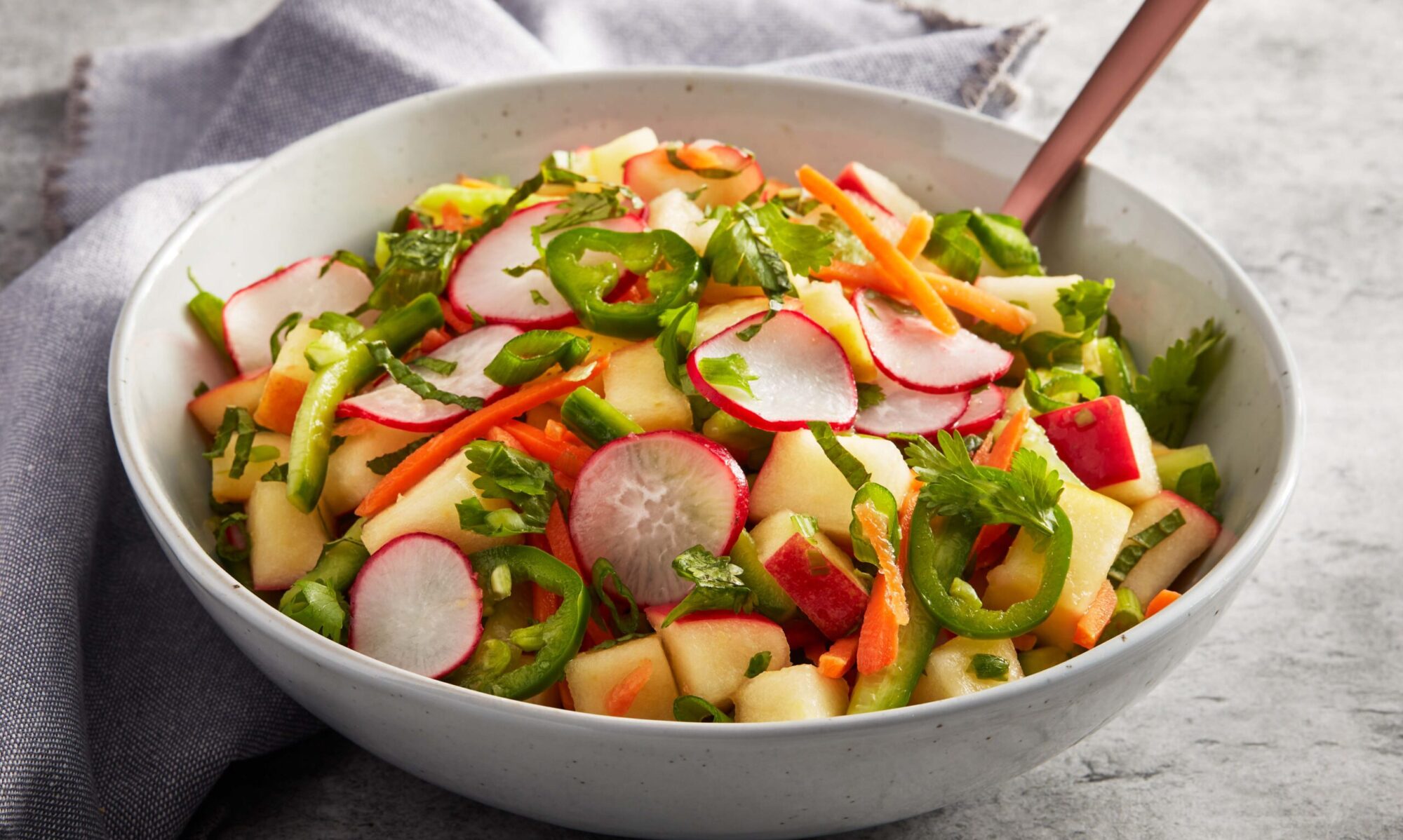
The apples or pears give you that first little taste of fall while the greens keep dinner light and fresh.
Here’s to the Next Season
Maybe that’s what I want to remember this September.
We don’t have to rush into the next season.
And we don’t have to pretend we aren’t a little sad when the last one ends.

We can still eat tomatoes while buying apples.
We can wear sandals with a sweater.
We can miss what was and still be excited about what’s coming.
We can be grateful for an old chapter without trying to live there forever.
And we definitely don’t have to know exactly what’s next.
Sometimes we just need to keep moving, pay attention and trust that there’s more life ahead of us.

So here’s to the last sweet days of summer.
Here’s to those first cool September nights.
Here’s to soup pots and sweaters and colorful drives around the Finger Lakes.
Here’s to starting over when we need to.
And here’s to remembering that maybe we’re not lost at all.
Maybe we’re simply between seasons. 🍂
Tune In: A New Into Focus episode on The Artful Gourmet Podcast – 🎧
I’m taking this conversation a little deeper in my newest podcast episode of Into Focus:
Between Seasons: Letting Go, Beginning Again & Embracing Change
I talk about life’s unexpected transitions, letting go of old chapters, changing priorities, finding beauty in ordinary moments and learning to stay open to whatever might be waiting around the corner.
Listen on Spotify and The Artful Gourmet Substack, or wherever you get your podcasts. Episode drops in a few hours just in time for Labor Day!
And come tell me what season of life you’re in right now.
And if you make my Fabulous Fall Turkey & Veggie Soup, please comment below and let me know how it came out or tag me with a photo of the soup on social @artfulgourmet.
#TheArtfulGourmet #FallRecipes #TurkeySoup #VegetableSoup #HealthyRecipes #SoupSeason #SweaterWeather #SeasonalCooking #FallCooking #ComfortFood #HealthyComfortFood #FingerLakes #UpstateNY #SeptemberRecipes #WinePairing #IntoFocus