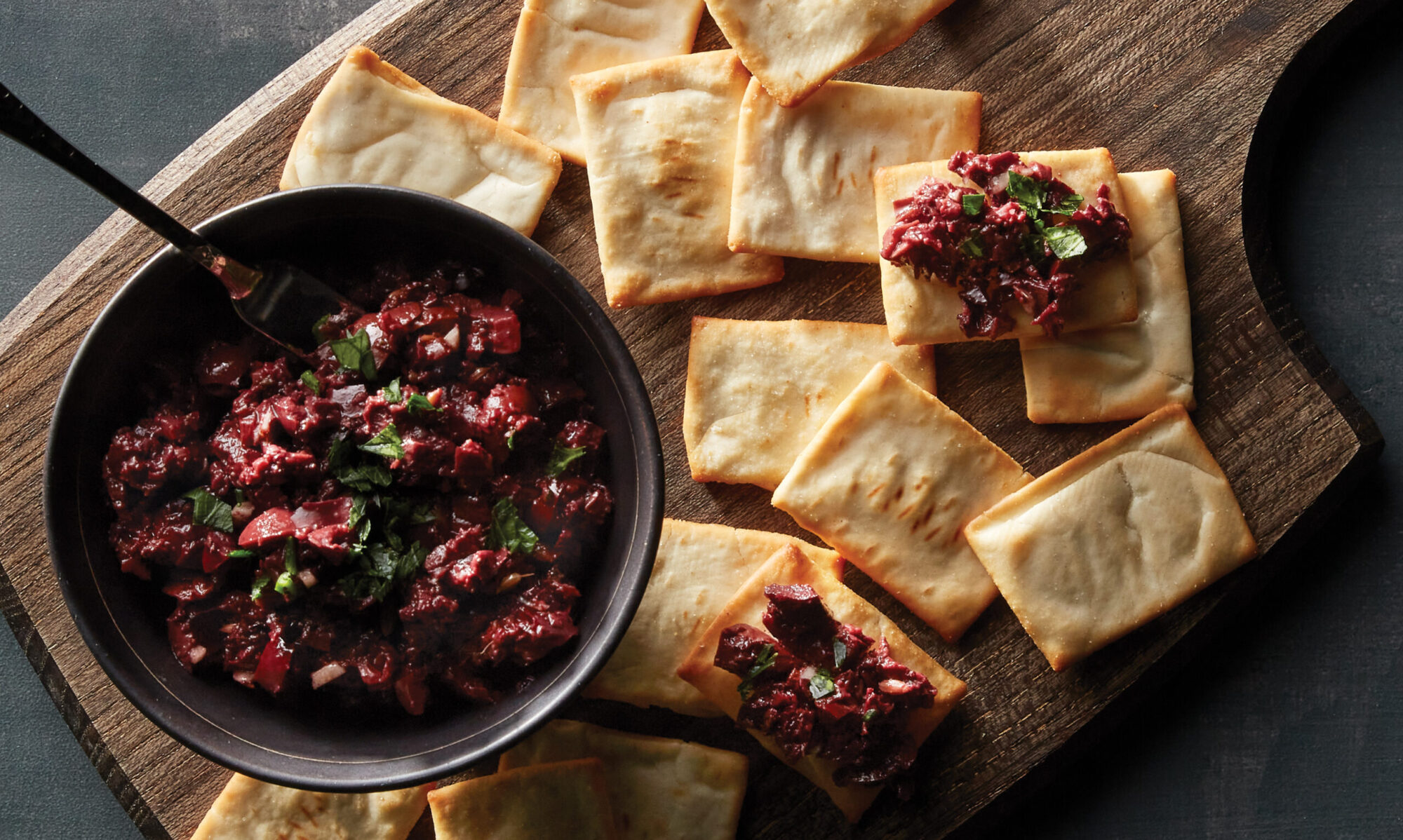
This buttery garlic clam pasta recipe has been a family favorite for more than 35 years—and it’s still one of the best seafood pasta dishes you’ll ever make.
Summer always puts seafood on my mind.
Maybe it’s the warm weather, the longer evenings, or memories of family dinners back home in Rochester, New York. Whatever it is, there’s something about a big bowl of seafood pasta paired with a crisp glass of white wine that feels like summer itself.
One of my favorite recipes is this classic Linguine&Clams recipe from Bill Gutsch, a beloved Rochester, NY news anchor whose recipe became famous after it won a local city-woe recipe contest an appeared in the Democrat & Chronicle food section decades ago.
Long before recipes went viral on social media, great dishes spread the old-fashioned way—from newspaper clippings to recipe boxes, from neighbors to friends, and eventually to family dinner tables like ours.
My mom clipped the recipe years ago and it quickly became a family favorite. She would make it for special occasions, summer dinners, or Friday nights when everyone gathered around the table with a green salad, garlic bread, and a bottle of wine.
The Gutsch’s Linguine
To this day, every time I make it, I’m transported right back to those evenings.
Why This Linguine & Clams Recipe Works
Let’s talk about the flavor combination.
Bacon.
Butter.
Garlic.
Clams.
Fresh parsley.
Black olives.
Pasta.
Need I say more?
The salty bacon and briny clams create an incredible depth of flavor, while the butter and garlic bring everything together into a silky, savory sauce that coats every strand of linguine.
Is it diet food?
Absolutely not.
Is it worth every bite?
Absolutely yes.
Sometimes it’s okay to indulge a little.
In a world obsessed with counting calories and cutting carbs, recipes like this remind us that food is meant to be enjoyed. There’s something comforting about old-school recipes that don’t apologize for being rich, satisfying, and delicious.
As I’ve gotten older, I’ve come to appreciate these recipes even more. They’re not just meals—they’re memories. I remember my Mom and Dad making this dish on a Summer Friday night- windows open, a Frankie Valli record playing in the background, a Gin and Tonic or glass of wine in hand, just enjoying the perfect setting of a family dinner together around our kitchen table in the mid-80s.
The Perfect Summer Seafood Dinner
This easy linguine and clams recipe comes together in about 30 minutes, making it perfect for:
Summer entertaining
Date nights at home
Beach house dinners
Family gatherings
Casual weekend meals
Serve it with:
Crusty Italian bread
A simple green salad
Sauvignon Blanc
Pinot Grigio
Finger Lakes Riesling
Vermentino
The bright acidity of these wines balances the richness of the butter while enhancing the sweet, briny flavor of the clams.
Gutsch’s Linguine & Clams
10 minutes
Gutsch’s Famous Linguine & Clams Recipe Prep Time 10 minutes
Cook Time 20 minutes
Total Time 30 minutes
Servings 2-4 servings
Ingredients
4-5 slices bacon, cut into ¼-inch strips
1/8 cup sliced green onions
1 garlic clove, minced
3 tablespoons butter
1 (6.5-ounce) can chopped clams or baby whole clams
¼ cup sliced black olives
1/8 cup fresh parsley, chopped
Freshly ground black pepper
6 ounces linguine pasta
Optional
¼ cup dry white wine
Extra parsley for garnish
Freshly grated Parmesan cheese
Instructions
Cook bacon in a large skillet until crisp. Remove and set aside, reserving about 1/8 cup bacon drippings in the pan.
Add green onions and garlic to the skillet and sauté until tender but not browned.
Stir in butter and allow it to melt completely.
Drain clams, reserving the clam juice.
Add clams, bacon, black olives, parsley, and black pepper.
Pour in half of the reserved clam juice and, if desired, add the white wine. Simmer gently for 2-3 minutes.
Meanwhile, cook linguine according to package directions until al dente. Drain.
Add cooked linguine directly to the skillet and toss until evenly coated.
Transfer to a serving bowl and garnish with additional parsley and black pepper.
Serve immediately with crusty bread and a chilled glass of white wine.
Recipe Notes
Substitute olive oil for butter for a lighter version.
Fresh littleneck clams may be used instead of canned clams.
Add crushed red pepper flakes for a little heat.
For extra garlic flavor, double the garlic.
The Story Behind the Recipe
The full story behind this Rochester classic—including memories of family dinners, summer evenings, and why recipes like this become part of our lives for generations—is featured in my latest Substack essay.
If you enjoy food stories, nostalgia, travel, wine, and recipes inspired by memorable moments, I’d love to have you join me there.
Going Analogue: Why We’re Craving a Slower, More Meaningful Life
There’s a quiet shift happening right now—and it doesn’t feel like a trend as much as a return – the ‘going analogue’ trend.
It’s a part of a growing slow living movement, where people are choosing to unplug from social media and reconnect with real-life experiences through food, music, and meaningful moments.
People are stepping away from the constant scroll, the noise, the pressure to keep up. They’re choosing slower moments. Smaller circles. Real conversations. Tangible things you can hold in your hands.
Film cameras. Handwritten notes. Scrapbooks. Polaroids. Vinyl records. Cooking meals instead of ordering them. Sitting around a table instead of a screen.
It’s the pull of nostalgia and meaningful moments – IRL again.
It’s my way of holding onto the feeling of growing up in the ’70s, ’80s and ’90s – when life felt a little slower, a little simpler, and a lot more together.
Across everything I create, this theme shows up again and again:
Every podcast episode, every blog post, every Substack essay, every YouTube video in this series is me chasing that feeling and inviting you to chase it with me. It’s retro recipes made with fresh, elevated ingredients — comfort food that honors the past while feeling relevant right now.
January 1978 wasn’t flashy or loud — it was warm, comforting, and full of everyday magic. The radio played soft rock on repeat, dinner was often a casserole bubbling in the oven, and family time happened around the table, not a screen.
The series is built around a simple but deeply felt premise:
food and music are the original time machines.
Play the right song while you’re making the right dish, and you’re not in your kitchen anymore — you’re somewhere else entirely. You’re nineteen again, or twelve, or thirty-two, in a place and a moment that mattered.
Where it all comes to life visually—food, music, mood, and storytelling all in one place.
A Return to What Actually Matters
Here’s what I keep coming back to, and what I think the analogue trend is really telling us: social isn’t dying. It’s evolving.
The future isn’t offline or online. It’s both, held together by intention.
And the creators and communities that will matter most going forward are the ones who understand that — the ones who bring real texture, real warmth, real humanity to what they share.
The ones who make you feel like a regular somewhere, not just a follower.
It’s about choosing:
to call a friend instead of texting
to cook instead of scroll
to sit and listen instead of multitask
to create memories instead of just capturing them
Writer Susan Sontag once observed:
“To collect photographs is to collect the world.”
But maybe now, we’re craving something deeper than collecting. We want to experience the world again.
That’s what Groovy Eats is for me. It’s my version of the scrapbook aesthetic — layered, personal, imperfect in the best way. It’s my vinyl record, my vintage film photo, my phone-free dinner table. It’s the place where food and music and memory get to exist together, without apology, on their own unhurried terms.
Groovy Eats is my way of preserving those moments—and creating new ones.
And maybe, in a world that’s constantly pulling us online…
this is our way back to each other.
If you’ve been feeling the pull toward something slower, something more real, something that actually fills you up instead of just filling your feed — pull up a chair. Put on a good song. Make something beautiful to eat.
That’s the whole vibe. That’s Groovy Eats.
✨ Follow More Nostalgia on Groovy Eats Series
If you’ve been feeling that pull too—to slow down, reconnect, and bring a little more meaning into your everyday life—
Stay tuned for Groovy Eats Episode 4 – Coming Soon!
Disco Night | Retro Cocktails & Late Night Bites 💃 🪩 🍹 🍤
Get ready to dance, eat, drink and party like it’s 1978 at the disco in West Hollywood and Studio54. Be prepared to cook, sing, dance , drink and eat some retro late night bites and cocktails from the era, to the music of Donna Summer, Our #1 Disco Queen. Coming Soon.
Kristen Hess is a Food Stylist, Photographer, Writer, and the creator of The Artful Gourmet — a food and lifestyle media brand rooted in fresh comfort food, visual artistry, and the stories we tell around the table. Find her on Substack, The Artful Gourmet Podcast and YouTube Channel and her
food blog at theartfulgourmet.com.
There’s a moment, right before it hits the table, when Chicken French announces itself. It’s the smell that gets you first — bright lemon cutting through rich, golden butter, the faintest whisper of white wine lifting off a hot skillet. Then comes the sound: that gentle, satisfied sizzle as thin, egg-battered cutlets settle back into their velvety pan sauce, soaking up every last drop of flavor. By the time the plate is in front of you — chicken nestled on a pretty tangle of linguine, scattered with fresh parsley, glistening under the light — you’re already sold.
If you grew up in Rochester, New York, you didn’t need to be sold. You already knew. Chicken French — or Chicken Francese, if you want to get Italian about it — is as much a part of Rochester’s identity as Xerox, Kodak, Wegmans, and the famous Nick Tahou’s Garbage Plate. It’s on the menu at white-tablecloth restaurants and neighborhood diners alike. It shows up at weddings, baptisms, and Sunday dinners. It is, without exaggeration, the dish of my hometown.
And a few years ago, it became the dish that brought the New York Times to my door.
A Little Dish With a Big History
To understand why Chicken French matters so much to Rochester, you have to understand where it came from — and how it got its confusingly un-French name.
The story starts in post-World War II New York City, where Italian immigrants brought with them a recipe for vitello francese: thin veal cutlets, dredged in flour, dipped in egg, sautéed in butter, and finished with a bright sauce of lemon and white wine. The name meant “veal in the French style” — a nod to the luxurious, buttery pan sauce that felt decidedly Parisian to Italian-American cooks eager to impress their new country. It became a staple on upscale Italian-American menus across the city, cousin to the piccatas and Marsalas that defined the era.
Eventually, the dish migrated north and west, to Rochester’s large, tight-knit Italian-American community. And that’s where things got interesting.
In 1967, a restaurant called the Brown Derby opened on Monroe Avenue in Brighton. Its chef, James Cianciola — known to regulars as Chef Vincenzo — began serving his own version of veal francese, and it quickly became the restaurant’s signature. Watch how they made it at the restaurant back in the day
Then came the 1970s, and with them, a wave of animal-rights protesters who picketed against veal outside restaurants across the country. Cianciola’s solution? Swap the veal for chicken. The result was, if anything, even better — more tender, more accessible, and just as soaked in that irresistible lemony butter sauce.
Chicken French was born. And Rochester claimed it entirely as its own.
No place has embraced chicken francese more warmly than Rochester, N.Y., a city with an illustrious history of great Italian-American cooking
Soon, the Brown Derby added artichoke French, haddock French, cauliflower French. Other restaurants followed. The dish spread through the city like the best kind of rumor, each kitchen adding its own touch — sherry instead of white wine, a handful of grated Romano in the egg wash, a shower of fresh parsley over the top. Today, food historians have half-jokingly suggested the dish should be renamed “Chicken Rochester.” The rest of the world calls it Chicken Francese. We just call it Chicken French.
And we know it’s ours.
The Phone Call I’ll Never Forget
Several years ago, I wrote about Chicken French on my blog — the history, the nostalgia, my recipe, the whole love letter. I adapted my recipe from “ROCgrandma” on AllRecipes and it was absolutely delicious! Seriously one of my favorite dishes ever.
I’m a food stylist, photographer and recipe developer based in New York City (and currently Texas), but I grew up in Rochester, and this dish has always been part of my personal food story. Writing about it felt like writing about home.
The single best use of boneless, skinless chicken breasts? This Italian-American staple, with its lemony, buttery pan sauce.
What I didn’t expect was a phone call from Julia Moskin, staff food writer at the New York Times Food section.
Julia was working on a story about Chicken Francese — what it is, where it came from, and why it had become such a phenomenon. She’d found my post and wanted to talk.
So we did: about the dish, about Rochester’s Italian-American history, about the way Chicken French shows up at every important meal in that city, from casual Tuesday dinners to black-tie wedding receptions. My sister Jenni, who has worked in Rochester’s restaurant industry for over 25 years, joined the conversation — she’d watched the dish evolve from the front of the house, seen every variation imaginable come across the pass.
When the story ran, it was on the front page of the New York Times Food section — both in print and online. My name was in it. My sister’s name was in it. And Julia’s recipe, the one that accompanied the piece, was declared the single best thing you can cook with a chicken breast.
I’ll be honest: I cried a little.
But the story wasn’t finished yet. By December 2018, the New York Times had mined its cooking data for the year’s most popular new recipes. Chicken Francese came in at number one. Number one. Out of every recipe the Times published that year, this buttery, lemony, deeply humble Italian-American dish from my hometown topped the list.
When I read that, I thought about every Rochester kitchen I’d ever stood in. Every Italian grandmother who made this without a recipe. Every chef who’d perfected his or her own version over decades of dinner service. Every Rochesterian who’d ever told an out-of-towner, “You have to try the Chicken French.”
We knew. It just took the rest of the world a little while to catch up.
Why You Need to Make This Recipe
Here’s the thing about Chicken French that surprises people who’ve never made it: it’s genuinely easy. Not “easy for an experienced cook” easy. Actually, truly, weeknight easy. Start to finish, you’re looking at 35 minutes.
The secret is the egg batter. Unlike a traditional flour-only breading, dipping the cutlets in beaten egg first creates a thin, protective coating that keeps the chicken moist and tender even as it browns. It’s the same technique used in Wiener schnitzel and fritto misto — a European tradition that American fried chicken never quite adopted, and honestly, a shame it didn’t.
The other revelation is the pan sauce. Once the chicken is browned, you wipe out the skillet, melt butter, add white wine and lemon juice, let it reduce to a syrupy gloss, then pour in chicken stock and cook it down to something silky and bright and deeply savory. You tuck the cutlets back in, let them warm through in the sauce, and that’s it. That’s the whole dish.
It’s also more forgiving than it looks. The cutlets and sauce can be made a few hours ahead and gently reheated — which makes it ideal for entertaining. Your guests will think you’ve been in the kitchen for hours. You haven’t.
A few things I always do: I add a pinch of grated Parmesan and a little fresh parsley directly to the egg wash — that’s the Rochester way, and it adds depth. I plate it on a nest of linguine so the pasta soaks up the extra sauce. And I always, always add the optional browned lemon slices. They’re beautiful, slightly caramelized, and utterly delicious.
Serve it with something starchy — pasta is traditional — or alongside broccoli or green beans if you want something lighter. Pour a crisp white wine: a Soave, a Chablis, a grüner veltliner. Or Champagne, which, as the Times noted, goes remarkably well with this.
Rochesterians might not agree, but I’ll allow it.
Rochester-Style Chicken French (Francese)
Featured in the New York Times, September 2018. Recipe by Julia Moskin; recipe serving suggestions and styling notes by Kristen Hess.
Yield: 4 servings | Total Time: 35 minutes
Ingredients
2 eggs
2 tablespoons whole milk
1 teaspoon salt, plus more for seasoning
½ teaspoon ground black pepper, plus more for seasoning
2 tablespoons freshly grated Parmesan or Pecorino cheese (Kristen’s addition — the Rochester way)
1 tablespoon freshly minced parsley, plus 3–4 tablespoons for finishing
1 cup all-purpose flour
⅓ cup olive oil
⅓ cup vegetable oil
4 to 6 large boneless, skinless chicken cutlets, thinly sliced
3 to 6 tablespoons unsalted butter
1 lemon, thinly sliced, seeds removed (optional but recommended)
½ cup dry white wine
Freshly squeezed juice of 1 lemon, more to taste
2 cups chicken stock
Instructions
1. Make the batter and prep the flour. In a wide, shallow bowl, whisk together the eggs, milk, salt, pepper, Parmesan, and 1 tablespoon parsley until fully combined. Place the flour in a separate bowl. Line a baking sheet with paper towels.
2. Heat the oil. In a wide skillet, heat the olive and vegetable oils over medium heat until shimmering.
3. Bread and fry the chicken. Working in batches, lightly dredge each cutlet in flour and shake off the excess. Dip into the egg batter, let the excess drip back into the bowl, then place in the skillet. Fry, turning once, until golden brown on both sides — about 4 minutes per side. Adjust the heat as needed so the cutlets brown slowly and evenly. Transfer to the paper-towel-lined pan. Repeat with remaining cutlets.
4. Wipe the pan. Remove the pan from the heat and carefully pour off the oil. Wipe it clean with paper towels, then return it to low heat.
5. Brown the lemon slices(optional). Melt 3 tablespoons of butter and scatter the lemon slices across the pan. Cook gently, stirring occasionally, until the slices are golden and beginning to caramelize at the edges, about 3 minutes. Remove and set aside.
6. Make the pan sauce. Add 3 tablespoons of butter to the pan along with the wine and lemon juice. Bring to a boil and cook until the liquid reduces to a syrupy glaze, about 3 to 4 minutes. Pour in the chicken stock, bring back to a boil, and cook until the sauce thickens, about 5 minutes. Taste and adjust with more lemon, salt, and pepper — it should be quite lemony and bright.
7. Finish and serve. Reduce the heat and nestle the cutlets back into the pan. Simmer very gently until the sauce is velvety and the chicken is warmed through, about 4 minutes, turning the cutlets occasionally so they’re coated all over. Lay the browned lemon slices on top. Sprinkle generously with fresh parsley and serve immediately, spooning plenty of sauce over each plate.
Kristen’s Tips
Plate it beautifully: Serve over a nest of linguine tossed with a little olive oil and butter. The pasta soaks up the sauce in the most glorious way.
Make it ahead: Brown the cutlets and make the sauce up to 3 hours in advance. Reheat gently on low heat before serving.
The sherry debate: Rochester restaurants are divided — sherry gives a slightly sweeter, more assertive sauce; dry white wine (I like Chablis or Pinot Grigio) keeps it crisp and clean. Try both and decide for yourself.
Make it your own: Try haddock French, shrimp French, or artichoke French using the same sauce. Once you master the technique, everything tastes better “French’d.”
Come Home to the Table
There’s something I love about a dish that carries a whole city inside it. Chicken French is that for me — every time I make it, I’m back in Rochester, at some long Italian dinner that stretches into the night, with a glass of wine and people I love and the smell of butter and lemon in the air.
I’m so proud that this recipe — and this little corner of upstate New York food history — made it to the front page of the New York Times. And I’m even prouder to share it with you here, in this space, where I get to write about food the way it deserves to be written about: as story, as memory, as something worth gathering around.
If you make this — and I hope you will — I’d love to know. Leave a comment below, reply on Substack, or tag me when you share it. Tell me how you served it, what wine you chose, whether you went sherry or white wine. Tell me if it took you somewhere.
For me, it always takes me home. 💛
About Me
Kristen Hess is a food stylist, photographer, recipe developer, and writer behind The Artful Gourmet. Find more recipes, food stories, and culinary inspiration on her Substack.
A simple Italian classic that turns weeknight cooking into a little spring celebration
“Spring is nature’s way of saying, ‘Let’s party.’” — Robin Williams
There’s something about spring that just makes you want to cook again.
The light changes, the air softens, and suddenly the kitchen feels less like a chore and more like a place you actually want to be. Markets start filling up with bright greens, and you find yourself grabbing armfuls of anything fresh and in season without even thinking twice.
That’s exactly where this dish comes in.
Straw and Hay Pasta—or Paglia e Fieno—is one of those effortlessly beautiful Italian recipes that looks impressive but couldn’t be simpler to make. It’s named for the mix of golden egg pasta and green spinach pasta, tossed together like ribbons of sun and grass. Add a silky cream sauce, sweet peas, and crispy pancetta, and you’ve got something that feels special… without trying too hard.
The Best Part? It Tastes Like Spring
This dish isn’t just pretty—it’s all about what’s in season.
Sweet peas are the real star here. They bring that fresh, slightly grassy sweetness that only shows up this time of year. Frozen peas work perfectly (honestly, they’re a weeknight lifesaver), but if you spot fresh English peas at the market, grab them. They’re worth it.
Scallions add a soft, delicate onion flavor that melts right into the sauce, and
Pancetta brings that salty, crispy bite that balances everything out. It’s creamy, fresh, savory, and just a little indulgent—in the best way.
Make It Your Own (Easy Spring Swaps)
This is one of those recipes that plays well with whatever you have on hand:
Asparagus – sliced thin and sautéed for a little bite
Leeks – soft, buttery, and slightly sweet
Sugar snap peas – for crunch and freshness
Fava beans – if you want to elevate it a bit
Prosciutto or bacon – both work beautifully in place of pancetta
Think of this as your base—and then make it yours depending on what looks good at the market.
What to Drink With It 🍷
A cream-kissed pasta with salty pancetta and sweet spring peas calls for wines that are bright and structured enough to cut the richness without overwhelming the dish’s delicate character.
Pinot Grigio – clean, citrusy, classic pairing
Vermentino – a little more interesting, slightly herbal and bright
Both cut through the richness and keep everything feeling light and balanced.
Why This Is Perfect for a Weeknight
This is a true 30-minute pasta—no shortcuts, no compromises.
You build a quick sauce, cook the pasta, toss everything together, and finish with plenty of Parmigiano-Reggiano and fresh herbs. That’s it.
It’s simple, comforting, and exactly the kind of dish that reminds you why Italian cooking never goes out of style.
Straw + Hay Pasta with Pancetta, Spring Peas & Cream
Cuisine: Italian | Serves: 4 | Total Time: 30 minutes
Ingredients
Kosher salt and freshly cracked black pepper
4 scallions, trimmed and sliced
2 cloves garlic, minced
2 tablespoons olive oil
1 cup baby peas (fresh or frozen)
4 oz pancetta, diced
⅔ cup chicken broth
½ cup heavy cream or half-and-half
½ lb egg pasta (fettuccine or linguine)
½ lb spinach pasta
½ cup freshly grated Parmigiano-Reggiano
Fresh parsley, chopped
Instructions
Bring a large pot of salted water to a boil.
Heat olive oil in a saucepan. Add scallions and cook 1–2 minutes.
Stir in peas and cook another 2–3 minutes.
Add pancetta and cook until crisp and golden.
Pour in broth, simmer until reduced slightly, then add cream. Cook until silky.
Cook pasta until al dente, then transfer directly into the sauce.
Toss everything together over high heat until glossy.
Finish with Parmesan, black pepper, and parsley. Serve immediately.
Final Thoughts
This is the kind of dish that feels like a reset after winter—light, fresh, and just a little indulgent. Perfect for a casual dinner, but pretty enough to serve to friends with a chilled bottle of wine and a good playlist in the background.
Simple, seasonal, and seriously satisfying—this is spring on a plate. 🌿🍝
Keep Exploring
If you loved this recipe, there’s more where that came from:
👉 Read the full, more personal essay on Substack (deeper storytelling + behind-the-scenes inspiration)
Welcome to Groovy Eats – our new YouTube show + Podcast that goes back in time, pairing retro music + recipes from the 70s, 80s and 90s 🎶 ⭐
Episode 1 | January 1978 :: Chicken Divan, “Baby Come Back,” + the Comfort of Simple Times
Some years stay with you forever.
For me, 1978 is one of them.
Me, my Sister Jen and Dad
January 1978 wasn’t flashy or loud — it was warm, comforting, and full of everyday magic. The radio played soft rock on repeat, dinner was often a casserole bubbling in the oven, and family time happened around the table, not a screen.
Baby Come Back by Player
That’s the spirit behind Groovy Eats Episode 1, my long awaited, brand new cooking show series. Each episode I’ll be pairing a #1 retro hit from the week with a beloved retro recipe from that same time period. Groovy Eats is all about letting food and music do what they do best – take us back in time, bring back the good memories, and take us home.
The Song That Sets the Mood: “Baby Come Back”
The #1 song this week in January 1978 was “Baby Come Back” by Player —
Baby Come Back by Player
a smooth, emotional soft-rock anthem that helped define the late ’70s “yacht rock” era. It remained #1 on the charts for 6 weeks in January and February 1978, along with other Yacht Rock and soft rock bands like the Bee Gees, Paul Simon, Ambrosia, Fleetwood Mac, and Styx.
Billboard Top 100 – January 1978
“Baby Come Back” is a song about lost love, longing, regret, and hope — wrapped in gentle harmonies and that unmistakable mellow groove. It didn’t demand attention. It earned it. And it remains one of my favorite 70s love songs today.
Baby Come Back #1 Single 1978 Player
For me, this song instantly brings back memories of an epic and unforgettable five-week family road trip in the Summer of 1978 from New York to California and back.
Me and my sister Jen on roadtrip out West 1978
I was 8 years old and my family packed me and my sister up in the back of a truck, with a hitch and an RV – and we adventured off into the unknown to the wild wild West.
Kristen+Mom
Kristen and Jenni 1978
Dad, Jen and Mom
Mom and Dad 1970s
Long highways, crossword puzzles, campfires and marshmallows, hiking and exploring nature, panning for gold, salt flats in Salt Lake City, feeding Prairie Dogs in the Badlands, walkie talkies, Seattle, Mount Rushmore, geysers in Yellowstone Park, desert sunsets, and the radio always on.
Yacht Rock
This music was the soundtrack to childhood freedom — when life felt simple and wide open. Yacht Rock was king and something that always reminds me of that trip and the memories with my family as we traveled out West, without a care in the world.
The Dish That Brings It All Back: Chicken Divan
If the song sets the emotional tone, Chicken Divan sets the table.
Originally created in the early 1940s by Anthony Lagasi, chef at at the elegant Divan Parisien restaurant at Hotel Chatham in New York City, Lagasi had created a baked dish using chicken and broccoli in a rich bechamel sauce, creating the casserole we now know as Chicken Divan. It eventually made its way into American home kitchens — and by the 1970s, it was a full-blown casserole classic that everyone loved.
Creamy. Cozy. Comforting.
It was the kind of dish that felt “fancy” but familiar — perfect for family dinners and dinner parties alike.
This was a recipe my mom made for us, and when it was in the oven, you knew dinner was going to be good. It meant everyone was home. It meant we were sitting down together.
The casserole features chicken, broccoli, and a creamy curry sauce with a little lemon and wine added for flavor, topped with Cheddar cheese, buttery parmesan panko breadcrumbs and slivered almonds, all baked in the oven for a delicious and easy weeknight retro dinner the family will love.
This cozy and delicious casserole only takes about 30-45 minutes to make from start to finish, and you can make it ahead of time and reheat it in the oven or microwave leftovers, or cover it well in plastic wrap/foil and freeze it for later.
The recipe below is the shortcut version that my Mom used to make in the 70s-80s but if you have time and the desire – you can choose to make a creamy Mornay sauce in place of the Cream of Chicken Soup and mayo if you’re feeling fancy.
Side Note: A Mornay sauce is a béchamel sauce with grated cheese added. The usual cheeses in French cuisine are Parmesan and Gruyère, but other cheeses may also be used. In French cuisine, it is often used in fish dishes. In American cuisine, a Mornay sauce made with cheddar is commonly used for macaroni and cheese.
Please enjoy this luscious curry chicken cheesy broccoli delight – and let’s go back in time to 1978 – when life was good.
Chicken Divan (Late-’70s Casserole Style)
A true “Retro Metro” staple — exactly how it was loved in 1978.
Chicken Divan was a A “Retro Metro” staple that remained highly popular in 1978. It consisted of chicken and broccoli smothered in a cheese-infused Mornay sauce (or the shortcut version I made in the recipe below, using condensed soup), often topped with buttered breadcrumbs and/or toasted almonds.
How it was typically served:
Over rice or buttered noodles with a green salad and crusty bread and a crisp white wine — very late ’70s “continental dinner party” vibes.
Chicken Divan (Late-’70s Casserole Style)
In January 1978, popular recipes centered on elegant "Continental" dinner party fare, hearty winter stews, and the burgeoning "gourmet-to-go" movement. This month saw the peak of French-inspired classics and the debut of unique internationally-influenced dishes that defined the late 1970s. Chicken Divan was a "Retro Metro" staple that remained highly popular in 1978. It consisted of chicken and broccoli smothered in a cheese-infused Mornay sauce (or the shortcut version using condensed soup), often topped with toasted almonds.
3cupscooked chicken,chopped or shredded (rotisserie works well)
4cupsbroccoli florets (or 2 (10 oz) packages broccoli spears), cooked until just tender
2cans(10.5 oz each) condensed cream of chicken soup (or cream of mushroom)
1cupmayonnaise
1-2tsplemon juice
1-2tspcurry powder
1/4cupdry white wine or a splash of sherry
1.5cupsshredded cheddar
4tbspgrated Parmesan
1/4 cuppanko or italian breadcrumbs
1knobbutter, melted for Parmesan Panko topping
1/2cupsliced almonds
Method
Heat oven to 350°F.
Arrange broccoli in the bottom of a greased 9x13-inch baking dish. Top with chicken.
In a bowl, mix soup, mayonnaise, lemon juice, curry powder, and wine/sherry until smooth.
Spread sauce over the chicken and broccoli. Sprinkle with cheese.
Top with sliced almonds (and/or buttered crumbs).
Bake 25–35 minutes, until hot and bubbling. Let rest 5–10 minutes before serving.
Notes
How it was typically served in the 70s: over cooked rice or with buttered noodles (very “Continental dinner party” energy).Garlic bread and a green salad are great sides. And a light crisp white wine like Sauvignon Blanc or Chardonnay pairs well, if you're feeling fancy.You can make it ahead of time and freeze it for later. Simply let it thaw and bake at 350 degrees for 25-30 minutes.
Why Music and Food Are the Ultimate Time Machines
What I love most about this pairing is how effortlessly it transports you.
One song. One dish.
Suddenly you’re back in another decade — remembering the people, the places, the feeling of being safe and cared for.
Food holds memory. Music unlocks it.
Dad, my Sister and Mom in 1978.
My childhood home in 1978 on Cherry Hill Lane, in West Webster NY .
That’s the heart of Groovy Eats — cooking through the decades, one groove at a time, and honoring the moments that shaped us along the way.
Watch & Listen 🎶🍽️
🎥 Watch the full episodeon YouTube to groove out to the song and cook along with me
If this episode sparked a memory for you, I’d love to hear it. Leave a comment and tell me: What song or dish instantly takes you back to childhood?
🎥 And please don’t forget to share, like and subscribe so you never miss a post, cooking video or podcast episode of Groovy Eats and The Artful Gourmet. 🎤
Until then, peace out, and keep grooving, one bite at a time. 😀🌟🙌
Used to monitor number of Google Analytics server requests when using Google Tag Manager
1 minute
_gid
ID used to identify users for 24 hours after last activity
24 hours
_gali
Used by Google Analytics to determine which links on a page are being clicked
30 seconds
_ga
ID used to identify users
2 years
__utmx
Used to determine whether a user is included in an A / B or Multivariate test.
18 months
__utmv
Contains custom information set by the web developer via the _setCustomVar method in Google Analytics. This cookie is updated every time new data is sent to the Google Analytics server.
2 years after last activity
__utmz
Contains information about the traffic source or campaign that directed user to the website. The cookie is set when the GA.js javascript is loaded and updated when data is sent to the Google Anaytics server
6 months after last activity
_gac_
Contains information related to marketing campaigns of the user. These are shared with Google AdWords / Google Ads when the Google Ads and Google Analytics accounts are linked together.
90 days
__utmc
Used only with old Urchin versions of Google Analytics and not with GA.js. Was used to distinguish between new sessions and visits at the end of a session.
End of session (browser)
__utmb
Used to distinguish new sessions and visits. This cookie is set when the GA.js javascript library is loaded and there is no existing __utmb cookie. The cookie is updated every time data is sent to the Google Analytics server.
30 minutes after last activity
__utmt
Used to monitor number of Google Analytics server requests
10 minutes
__utma
ID used to identify users and sessions
2 years after last activity
SourceBuster is used by WooCommerce for order attribution based on user source.
Name
Description
Duration
sbjs_migrations
Technical data to help with migrations between different versions of the tracking feature
session
sbjs_current_add
Timestamp, referring URL, and entry page for your visitor’s current visit to your store
session
sbjs_first_add
Timestamp, referring URL, and entry page for your visitor’s first visit to your store (only applicable if the visitor returns before the session expires)
session
sbjs_current
Traffic origin information for the visitor’s current visit to your store
session
sbjs_first
Traffic origin information for the visitor’s first visit to your store (only applicable if the visitor returns before the session expires)
session
sbjs_udata
Information about the visitor’s user agent, such as IP, the browser, and the device type
session
sbjs_session
The number of page views in this session and the current page path